
How to comply with the DeCA in timber transport
For the forestry and timber sector, where much of the raw material and product moves by road, applying the DeCA directly affects operations between forest, sawmill, factory and customer.
By Nemus Team
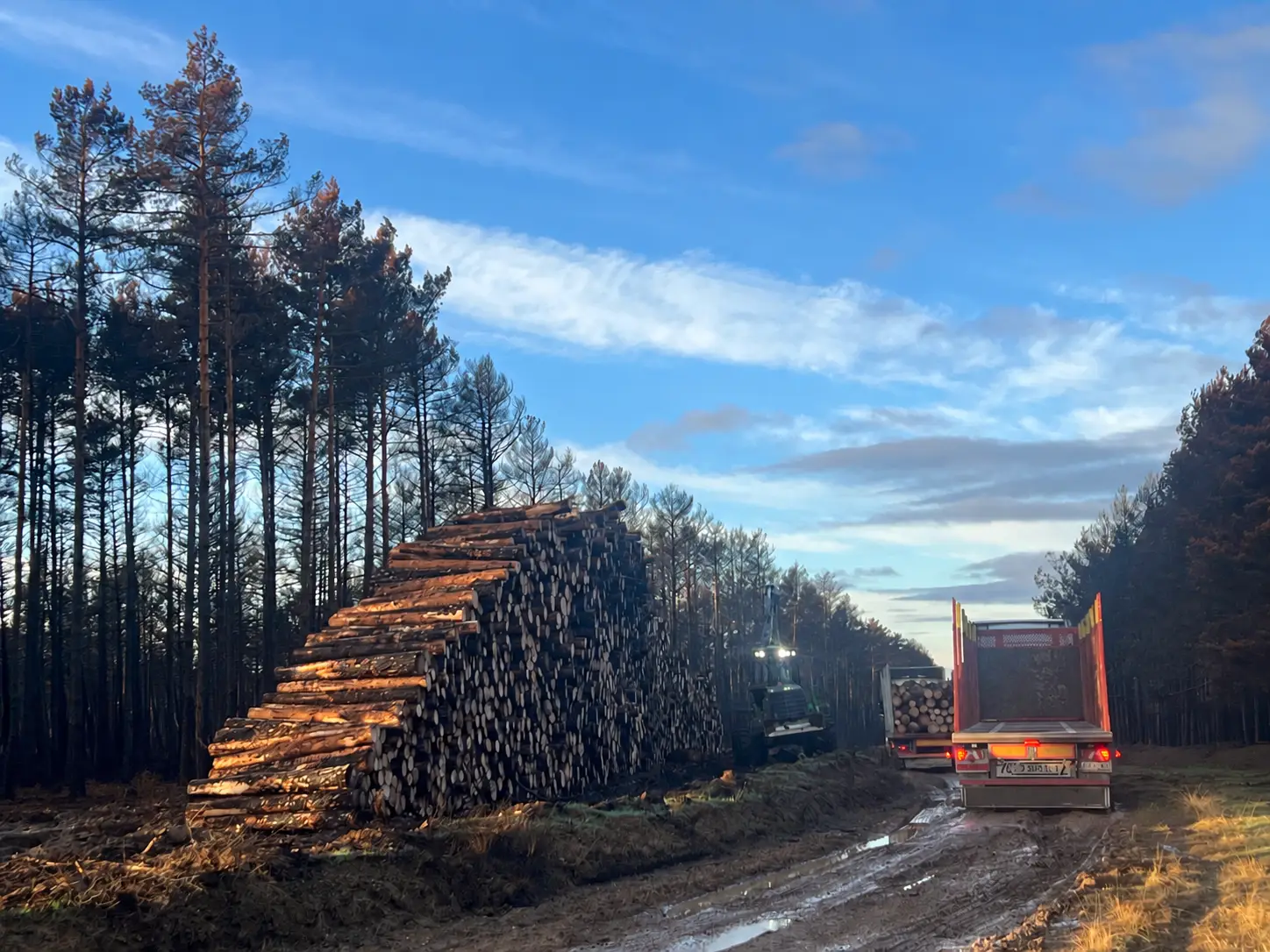
Since 5 October 2026, the DeCA has been mandatory for road freight transport in Spain. From that date, paper is no longer valid and the control document must be handled in digital format.
Is your company ready? Here are the key points to know.
What is the DeCA?
The DeCA (Documento electrónico de Control Administrativo, electronic administrative control document) is not a new obligation.
The Administrative Control Document (DCA) already had to accompany certain public road freight transports. What changes now is its format: the document must necessarily be digital.
Its purpose is administrative: to show control officers that the transport is carried out in accordance with the regulations.
And one point matters: the data the DeCA requires is the same data already required on paper. So the challenge is not generating more information, but properly digitalising how it is managed.
DeCA 2026: the dates you need to know
Three dates are especially relevant:
- 5 December 2025: Law 9/2025 on Sustainable Mobility comes into force and the ten-month digitalisation period begins.
- 12 June 2026: the final technical requirements of the DeCA are published.
- 5 October 2026: the DeCA becomes mandatory and the paper document is no longer valid.
The clock is running. Companies that still manage their transport documents on paper should start preparing the transition now.
Which transports does the DeCA apply to?
Digitalisation does not change which transports are subject to the control document.
The basic rule is simple:
If a haul already needed the paper control document, from 5 October it needs a DeCA.
In the timber sector, this affects, for example, contracted public transport:
- From the forest to the sawmill or factory.
- From the sawmill to the customer.
- Between different sites.
By contrast, complementary private transport (own goods carried in own vehicles as an ancillary activity) does not require a DeCA. Neither does international transport, where the CMR is used.
If you have doubts about a specific type of haul, you will find the details of included and excluded transports in [our guide].
How to comply with the DeCA
There is no single mandatory application for managing the DeCA. Each company can choose the option that best fits its operations.
Available options include:
- Adapting the ERP or management software the company already uses.
- Using SIMPLE, the free platform promoted by the Ministry together with Puertos del Estado and ADIF.
- Turning to a specialised solution that lets you integrate the DeCA with other processes, such as the platform that digitalises timber sourcing, Nemus, and its free companion app for carriers: Trucker.
For a timber company, this last point can make a big difference.
The DeCA in the timber sector
The change has a particular impact on the sector because a large share of timber hauls is carried out by contracted public transport.
But there is an advantage: practically all the information needed for the DeCA is already part of daily operations.
Origin, destination, nature and weight of the goods, licence plates or transport date are data already generated during a haul.
The key is to capture it in a structured way and be able to use it when needed.
There is also a clear link to timber traceability. Data such as geolocations, weighings or information tied to movements also feeds into other management and compliance processes, including the EUDR.
Instead of managing each obligation in isolation, digitalisation allows a model in which the same piece of data can serve different processes.
Complying with the DeCA helps your daily operations
The entry into force of this regulation is an opportunity to review how you manage your transports and move towards more integrated operations, with less duplication and better control of information.
Now is the time to review which transports need a DeCA, identify how their data is currently managed, define responsibilities with carriers and choose the tool the company will use.
Frequently asked questions about the DeCA
Does the DeCA replace the consignment note?
No. They are different documents with different purposes. For certain domestic transports, both the DeCA and the consignment note will be required.
Who must generate the DeCA?
The regulation does not specify which party must generate it. The contracting shipper and the actual carrier must agree on how to do it. The responsibilities of each party are especially important, and we explain them in detail in the guide.
What technical requirements must it meet?
The DeCA must meet specific requirements on its generation, format, QR code, storage and access. Scanning the old paper document is not enough.
In the guide you will find all the technical requirements and the process to follow before, during and after each transport.
Download the complete DeCA guide for the timber industry
These are the keys to understanding the change, but since 5 October you must have other questions settled: who is responsible for the document, what data it must include, how the QR works, what happens if a vehicle changes during the service or how long it must be kept.
To help you, we have prepared the DeCA Guide and Deadlines in Spain, specifically aimed at the timber industry.
Download the guide for free and see step by step how to prepare your company for the DeCA.
At Nemus we help forestry and timber companies integrate the DeCA with transport management and timber traceability, avoiding duplicated data and processes.